Creative Spring: A Font That Brings Your Designs to Life
There's a particular kind of energy that comes with the arrival of spring—the burst of color after a monochrome winter, the sense of renewal, the feeling that everything is about to bloom. Creative Spring, a full-color display font, captures that energy and packages it into letterforms you can use across your creative projects. It's not just another decorative typeface. It's a design asset built to make your work stand out with minimal effort and maximum visual punch.
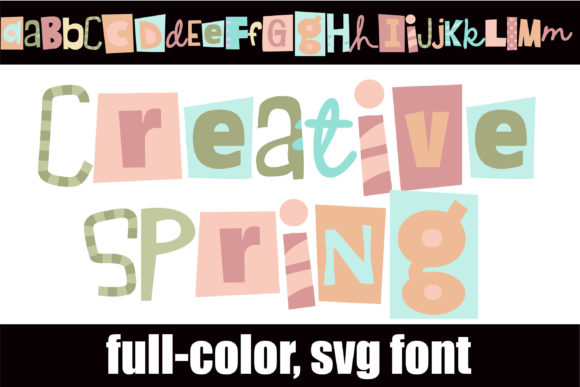
At its core, Creative Spring is an OpenType-SVG color font rendered in a bright, spring-inspired palette. Think soft greens, warm corals, gentle yellows, and sky blues layered into each glyph. The lettering style leans creative and expressive without sacrificing legibility. It's simple in structure but bold in presence, which is exactly the combination that makes a display font useful rather than gimmicky. If you've ever struggled to find a typeface that feels both playful and polished, this one sits in that sweet spot.
Where Creative Spring Actually Works
Not every font earns its place in a professional workflow. Some look great on a specimen sheet but fall apart in real application. Creative Spring holds up because its visual personality is versatile enough to serve multiple project types without feeling out of place.
For logo design, especially for brands targeting younger demographics or lifestyle markets, Creative Spring offers an instant sense of approachability. A bakery, a floral studio, a children's boutique, a wellness brand—these are the kinds of businesses where a colorful, warm typeface reinforces the brand identity rather than undermining it. The font does a lot of the heavy lifting in establishing tone, which saves you time in the conceptual phase.
In editorial design, Creative Spring works well for pull quotes, chapter headers, magazine covers, and feature titles. It's not a body text font, and it shouldn't be treated as one. But as a display font layered into a layout that uses a clean serif font or a neutral sans serif font for running text, it creates a compelling visual hierarchy. The contrast between a colorful, expressive heading and a straightforward paragraph is one of the most reliable techniques in modern typography, and Creative Spring slots into that role naturally.
Packaging design is another area where this typeface shines. Product labels, box graphics, hang tags, and wrapping paper all benefit from a font that communicates warmth and creativity at a glance. When a customer picks up a product from a shelf, you have maybe two seconds to convey what your brand is about. A font like Creative Spring does that work before they even read the words.
For social media graphics, the font is practically built for the job. Instagram stories, Pinterest pins, Facebook headers, YouTube thumbnails—these platforms reward bold, eye-catching visuals. Creative Spring's full-color rendering means your text doesn't need additional effects or overlays to grab attention. It arrives ready to use, which is a genuine time-saver when you're producing content at volume.
And for web design, while you wouldn't set an entire page in Creative Spring, it can elevate hero sections, landing page banners, and promotional callouts. Pair it with a clean, modern typeface for body copy, and you've got a layout that feels intentional and contemporary.
How a Font Like This Shapes Perception
Typography is never neutral. Every typeface carries emotional weight, cultural associations, and visual expectations. When you choose Creative Spring for a project, you're making a statement about the personality of the brand or message. It signals creativity, warmth, freshness, and approachability. That's useful information for your audience, even if they process it subconsciously.
Consider how font pairing works in practice. Creative Spring is a premium font with a strong visual identity, which means it pairs best with restrained companions. A simple serif font like Playfair Display or a geometric sans serif like Montserrat gives Creative Spring room to breathe without competing for attention. The goal is contrast, not conflict. When your display font and your body font are both fighting for dominance, the reader loses. When they cooperate, the entire layout feels cohesive and professional.
Brand consistency is another consideration. If you're building a brand identity for a client or for your own business, the fonts you select become part of the visual system. Creative Spring works best for brands that want to project a sense of creativity and seasonal freshness year-round. It's not a font you'd choose for a law firm or a financial institution, but for a creative agency, a lifestyle blog, a handmade goods shop, or a community event, it reinforces the right values.
Recognition matters too. In crowded markets, the brands that win are the ones people remember. A distinctive typeface contributes to that memorability. When someone sees Creative Spring used consistently across a brand's social media graphics, packaging, and website, they start to associate that visual style with the brand itself. That's the kind of recognition that compounds over time.
Practical Guidance for Working with Creative Spring
Before committing to any font, it's worth evaluating whether it actually fits your project. Pull up a mock layout and test Creative Spring in context. Does it complement the imagery? Does it match the tone of the copy? Does it work at the sizes you need? A font that looks stunning at 72 point might lose its charm at 36, and vice versa.
Since Creative Spring is an OpenType-SVG color font, compatibility is an important detail. It works in Photoshop, Illustrator, Silhouette, and Inkscape. If you're a Cricut user, the OTF and TTF files included are not compatible with that platform, so plan accordingly. This is a technical limitation worth knowing before you start a project, not after.
One of the practical advantages of Creative Spring is its PUA encoding. That means every glyph, ligature, and alternate character is accessible through your system's character map or glyph panel, even in software that doesn't fully support OpenType features. For designers who like to swap in decorative alternates or create more organic-looking text, this is a meaningful benefit. You're not locked into a single set of letterforms.
Readability is always a factor with display fonts. Creative Spring is designed for headlines, titles, and short bursts of text—not for paragraphs. Use it where it performs best: large sizes, high-contrast backgrounds, and limited word counts. If you're working on a project that requires extended reading, pair Creative Spring with a more conventional creative font or a standard serif/sans serif for body text.
For commercial use, review the licensing terms included with your purchase. Most commercial font licenses cover standard business applications—logos, marketing materials, products for sale—but specifics vary. If you're planning to use Creative Spring in a product you sell, like printed merchandise or digital templates, confirm that your license permits that use. It's a small step that protects you down the line.
Finally, don't overlook the included styles and extras. Color fonts often come with alternate characters, stylistic sets, and decorative elements that expand what you can do. Spend some time exploring the full character set before you settle on a final design. You might find a ligature or an alternate that makes your layout feel more complete.
Creative Spring is a design asset that earns its place in a well-curated font library. It's not trying to be everything. It's a handwritten font with a colorful personality, built for specific use cases where warmth, creativity, and visual impact matter. Used thoughtfully, it can elevate your packaging design, sharpen your social media graphics, and give your brand identity a distinctive edge that generic typefaces simply can't provide.