Mosaic Glass Shatter: A Display Font with Fractured Brilliance
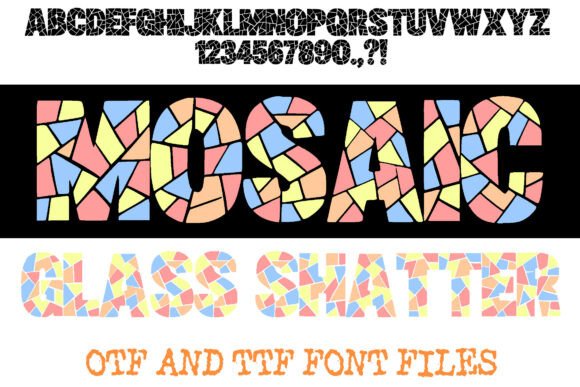
There are typefaces that whisper, and then there are typefaces that demand attention. Mosaic Glass Shatter firmly belongs to the latter category. This isn't your everyday serif or sans serif; it's a premium display font built from the ground up to be a visual statement. Imagine the intricate, colorful patterns of stained glass, then picture that glass shattering into sharp, deliberate fragments. That's the core idea behind this creative font. Each capital letter, number, and punctuation mark is crafted from a broken mosaic pattern, outlined in bold black. The result is a typeface with incredible texture, depth, and a distinct artistic edge that feels both playful and sophisticated.
The Personality and Practical Applications
The visual character of Mosaic Glass Shatter is unmistakable. It evokes a sense of dynamic energy and abstract artistry. The broken glass effect isn't chaotic; it's carefully composed to maintain legibility at a glance while delivering maximum impact. This makes it a powerful tool for projects where the headline is the hero. Think of a music festival poster where the band name needs to leap off the page, or the title card for an indie art film. Its inherent texture and bold outline make it perfect for applications where a handwritten font or a standard script font might feel too soft or conventional.
So, where does this display font truly shine? Its strengths lie in short, high-impact text. It's an exceptional choice for:
- Logo Design and Brand Identity: For brands that want to project creativity, innovation, or a bold, artistic personality—like a graphic design studio, a modern art gallery, or a craft brewery—Mosaic Glass Shatter can form the cornerstone of a memorable logo. It instantly sets a brand apart from those using more common modern typography.
- Marketing and Social Media Graphics: In the scroll-stopping world of social media, a striking title is everything. This font is ideal for Instagram graphics, YouTube thumbnails, Facebook event headers, and digital ad banners. It injects immediate vibrancy and ensures your key message isn't overlooked.
- Editorial and Packaging Design: Use it for chapter titles in a creative magazine, the cover of a special publication, or on packaging design for products like artisanal cosmetics, gourmet snacks, or specialty teas. It adds a layer of perceived value and craftsmanship.
- Digital Art and Personal Projects: For bloggers, content creators, and hobbyists, it's a fantastic asset for creating standout titles on websites, blog post headers, or invitations for a themed party. Its unique style makes digital creations and craft projects feel genuinely custom.
Making It Work in Your Design Toolkit
Integrating a bold typeface like Mosaic Glass Shatter into a project requires a thoughtful approach. Its strength is in its visual noise, so pairing it correctly is crucial for maintaining a clean visual hierarchy. A classic and effective strategy is to pair it with a clean, neutral sans serif font for body text. Think of something like Open Sans, Lato, or Montserrat. The simplicity of the sans serif will let the mosaic headlines breathe and ensure the overall design remains readable and professional. Avoid pairing it with another highly decorative or textured font, as this will create visual competition and confuse the viewer.
Before committing, always test the font within your specific project context. View it at the intended size and on the intended medium—does the mosaic pattern hold up on a mobile screen, or does it become muddy? On a printed poster, does the black outline print crisply? Remember, this is a commercial font, so understanding the licensing included (typically for OTF and TTF files) is essential if you're using it for client work or commercial products. Evaluate its fit not just aesthetically, but functionally. Is the mood it conveys—energetic, artistic, fragmented—aligned with the message you need to communicate? When used with intention, Mosaic Glass Shatter becomes more than just a design asset; it becomes a powerful tool for shaping audience perception and creating truly standout work in a crowded visual landscape.